Variety profile

Okitsu Satsuma Mandarin

(Citrus unshiu 'Okitsu')

Documented by Léo — grown in the ground, USDA zone 8b

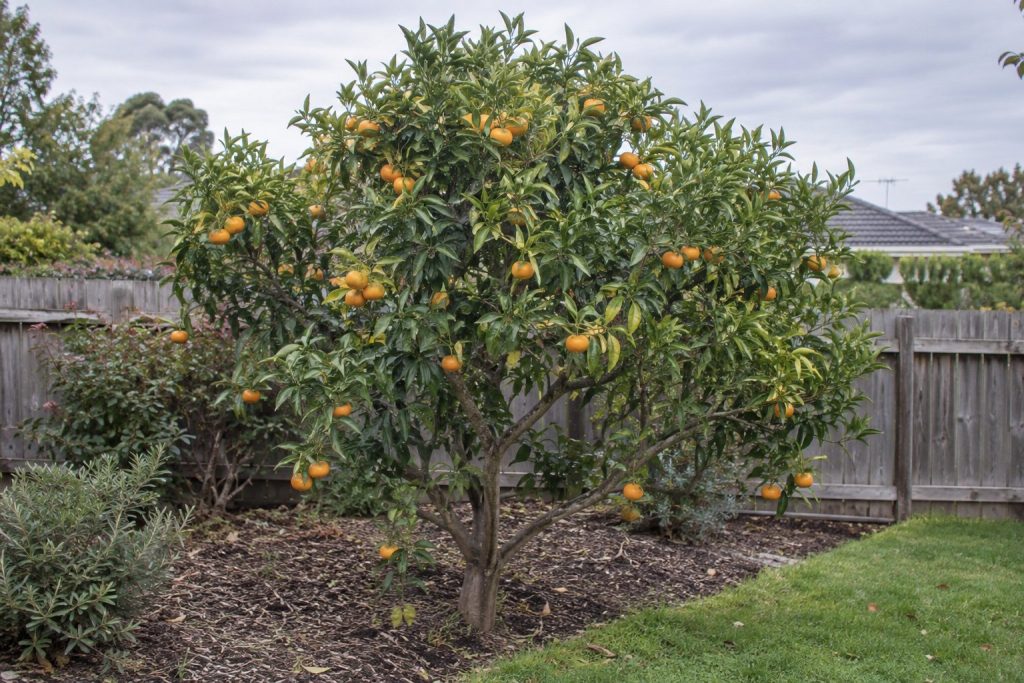
Okitsu satsuma mandarin (Citrus unshiu 'Okitsu') is an early Japanese satsuma selection from the Okitsu institute, a famous Japanese citrus research center. Its hardiness reaches 10°F (−12°C) on the tree, making it suitable for in-ground planting in USDA zone 8a. The tree reaches 6.5 to 10 ft (2 to 3 m) with a spreading, weeping habit, evergreen foliage and fragrant white flowers in spring. Its bright orange fruit, medium-sized, 3.5 to 5.3 oz (100 to 150 g), seedless, with thin skin that is very easy to peel, ripens from late October with particularly juicy, sweet, low-acid flesh and a much-appreciated flavor quality. A reference variety in modern Japanese satsuma breeding programs, widely distributed in southern Europe. Excellent fresh, as juice and as sorbet. Graft onto Poncirus trifoliata; south-facing wall.

A garden citrus tree bearing orange fruit beside a fence
AI-generated illustration. It does not authenticate cultivar identity or cold tolerance.
Cold hardiness 10°F (−12°C)

Identity

OriginJapan
Genetic originMiyagawa seedling (or mutation)
USDA zone
Cold hardiness10°F (−12°C)
Fruit cold hardiness25°F (−4°C)
GrowthVigorous
Height10 ft (3 m)
HarvestOctober, November
SeedsSeedless
FlavorsVery sweet, Mild

History & Description

Origin

Okitsu is an early (Wase) variety obtained from a controlled seedling of Miyagawa pollinated by Poncirus (for hardiness) and then backcrossed, or more probably a clonal selection of Miyagawa. It is very popular in Spain and Japan.

Tree description

The tree is more vigorous than Miyagawa, with an upright habit that later opens up. It is known for very quick fruiting (early production).

Fruit quality

The fruit closely resembles Miyagawa but often ripens one to two weeks earlier. It is large, flattened and very rich in juice.

Flavor and ornamental interest

Okitsu stands out for very rapid sugar accumulation. It is often perceived as sweeter than Miyagawa at the same stage of ripeness. It is an excellent eating mandarin for fall.
Back to the collection

Updated:

"Growing rare citrus means accepting that nature has the last word, while whispering in its ear how to survive the winter."

Scroll to Top