
Identity
History & Description
Origin
Also known as 'Honeybell', Minneola was developed in Florida in 1931. It is the most famous tangelo in the world, the result of a cross between the Duncan grapefruit and the Dancy mandarin.Tree description
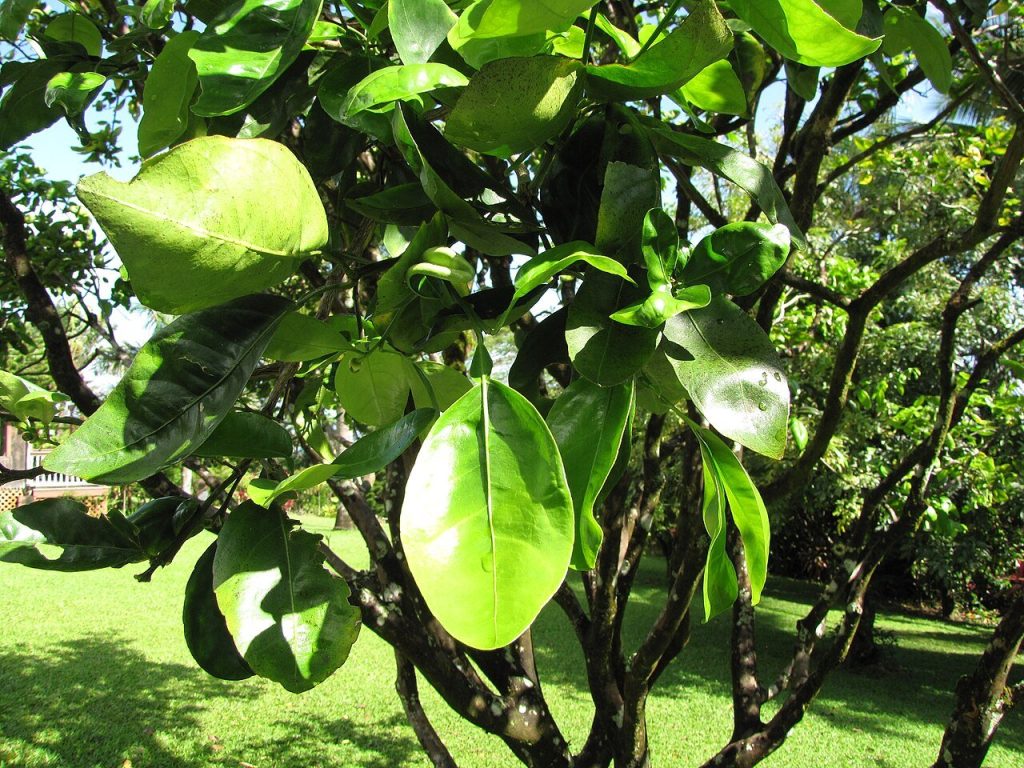
The tree is large, very vigorous, and productive. It is prone to alternate bearing and needs a pollinizer (such as clementine or Orlando tangelo) to fruit well.Fruit quality
The fruit is easily recognized by its "neck" or "nose" (prominent collar) at the base of the stem, giving it a bell shape. The skin is a deep red-orange, thin and easy to peel.Flavor and ornamental interest
It is an explosion of juice. The flesh is extremely juicy, with a rich, tart, spicy flavor typical of the best mandarins but in the generous size of a small grapefruit.Updated:
What matters when choosing
Key points about Minneola Tangelo
Minneola is a very juicy, aromatic, mildly tangy tangelo recognizable by its neck. For regular production it needs a compatible pollinizer nearby; this pollination can also increase the number of seeds.
Why choose it
- Abundant, juicy, intensely aromatic flesh.
- Attractive reddish-orange color.
- Distinctive fruit enjoyed fresh or as juice.
Its limits
- A compatible pollinizer is recommended for good fruit set.
- Pollination can make the fruit seedier.
- Late maturity and limited cold resistance.
Practical notes
- Parentage
- Duncan grapefruit × Dancy mandarin
- Harvest
- December through March
- Pollination
- Cross-pollination recommended
Cold-hardiness reference: about 16°F (−9°C)
Minneola is less cold-resistant than Orlando according to UCR; it is best suited to mild locations or protected growing.
Sources and method
The temperatures given are reference points for a mature tree with hardened wood. The table and callout repeat the same value as the profile. They guarantee neither freedom from damage nor a harvest after a freezing event.
Data reviewed on September 21, 2026.
- Givaudan Citrus Variety Collection — UCR — Parentage, fruit, season, pollination, and relative cold hardiness
- UF/IFAS — Minneola Tangelo — Origin, pollination, and horticultural characteristics
- UF/IFAS — Citrus Culture in the Home Landscape — Season, seeds, vigor, and diseases