Identity
History & Description
Origin
The Mandared Mandarin is a modern Italian hybrid developed in Sicily, the result of a sophisticated cross between the Nules Clementine (Citrus clementina 'Nules'), a Spanish variety renowned for its productivity and flavor quality, and the Tarocco blood orange (Citrus sinensis 'Tarocco'), the famous Sicilian red orange known for its anthocyanin pigments and red-fruit aromas. The name "Mandared" is a contraction of "Mandarin" and "Red", directly evoking the dominant visual and flavor characteristic of the variety: the appearance of a red to purple coloring in the flesh at full maturity, inherited from the Tarocco parent, very rare in classic mandarins and clementines. Selected and stabilized by Italian citrus research programs in the early 2000s, the Mandared is now marketed by the large Italian and French citrus nurseries, including Agrumerie Vessière and Pépinières Quissac. Its late maturity (February to April) and spectacular color make it a precious diversification variety for citrus collections.Tree description
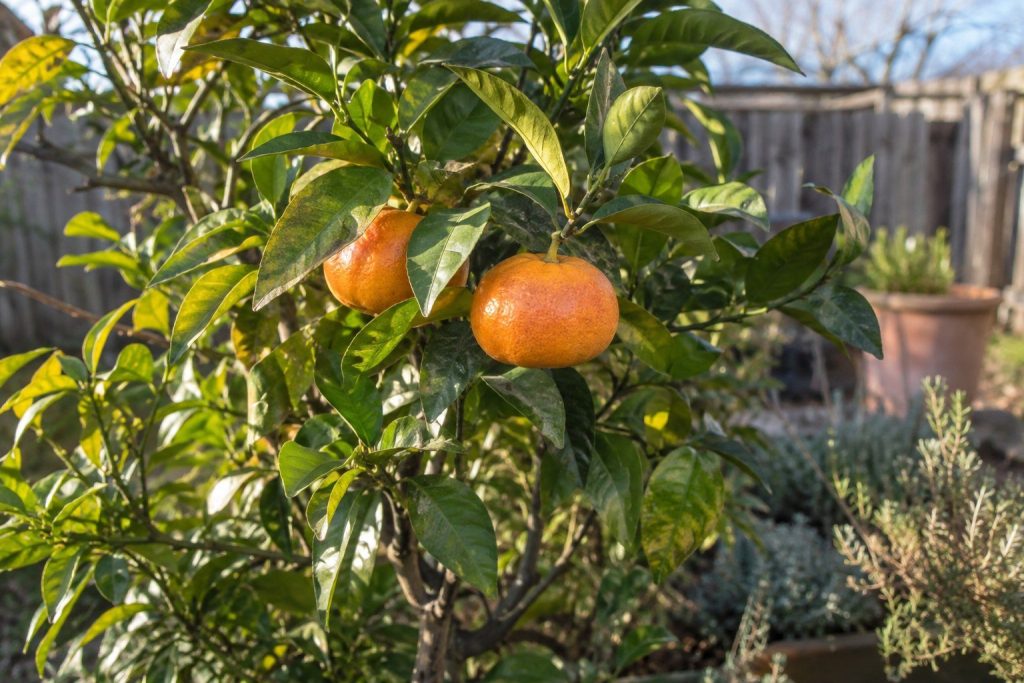
The tree forms a compact, manageable specimen of 6.5 to 10 ft (2 to 3 m) at maturity, with a balanced habit and evergreen foliage of a medium green. Its growth is moderate but steady, and fruiting is quick on FA5 or Poncirus trifoliata rootstock. The fragrant white spring blossom is abundant. Its hardiness, documented at around 18 to 16°F (−8 to −9°C) depending on rootstock and site, puts the Mandared at the limit between zone 8a and 8b, requiring a sheltered position in the continental areas of France.Fruit quality
The fruits, medium-sized, have thin, smooth skin of a bright orange shading toward red at full maturity. The flesh, particularly colorful and rich in anthocyanins (antioxidants), displays ruby pink to purple shades depending on how long it is exposed to cold before harvest. The flavor combines the sweetness and fragrance of the Nules clementine with the red-fruit, grenadine, and prune notes characteristic of the Tarocco parent, all seedless when pollinated in isolation.Flavor and ornamental interest
The Mandared is a gourmet mandarin, sought after for the visual sublimation it brings to desserts (tarts, sorbets, fruit salads), colorful cocktails, and antioxidant-rich juices. Its aromatic profile lends itself admirably to artisanal jams and jellies. As an ornamental, the orange-red coloring of its fruits in late winter offers a striking contrast with the evergreen foliage, extending the citrus production season into spring where most mandarins finish in January.Updated:
What matters when choosing
Key points about Mandared Mandarin
Mandared is a blood mandarin derived from Nules clementine and Tarocco orange. Its red flesh and sweet-tart flavor are distinctive, but color development requires cool nights and the fruit tends to drop before full maturity.
Why choose it
- Red flesh at maturity under favorable conditions.
- Sweet-tart blood-mandarin flavor.
- Distinctive fruit for fresh eating and colored juices.
Its limits
- Color varies with climate.
- Preharvest fruit drop can be substantial.
- Late maturity and low freeze tolerance.
Practical notes
- Parentage
- Nules clementine × Tarocco orange
- Type
- Pigmented triploid mandarin
- Uses
- Fresh fruit and juice
Cold-hardiness reference: about 16°F (−9°C)
Cool conditions favor pigmentation, but freezing is not a coloring technique: Mandared remains a citrus with limited cold hardiness.
Sources and method
The temperatures given are reference points for a mature tree with hardened wood. The table and callout repeat the same value as the profile. They guarantee neither freedom from damage nor a harvest after a freezing event.
Data reviewed on September 21, 2026.
- NSW Department of Primary Industries — Parentage, fruit quality, season, and coloration
- Agronomy — Mandared study — Productivity, preharvest drop, and rootstock effects
- StarGrow — Mandared — Commercial characteristics and fruit maturity