Identity
History & Description
Origin
The Kishu Mikan mandarin is native to southern China, cultivated since the eighth century and documented during the Ming dynasty in Jiangxi Province. Introduced to Japan more than a thousand years ago, it flourished in the historic region of Kishū, now Wakayama Prefecture. The Tokugawa family of Kishū promoted the cultivation of this mandarin tree on slopes unsuitable for rice growing, transforming these lands into prosperous orchards. The merchant Kinokuniya Bunzaemon (1669-1734) made his fortune shipping this fruit to Edo, establishing the Kishu as Japan’s most prestigious mandarin until the nineteenth century.Tree description
A tree of moderate growth, reaching 10 ft (3 m) in height, with a semi-dwarf habit well suited to container growing. The evergreen foliage is dense and glossy. The strongly fragrant white flowers appear abundantly in spring. The tree is self-fertile and comes into production early, requiring at least 6 to 8 hours of direct sunlight daily to develop its characteristic flavor and recognized taste qualities.Fruit quality
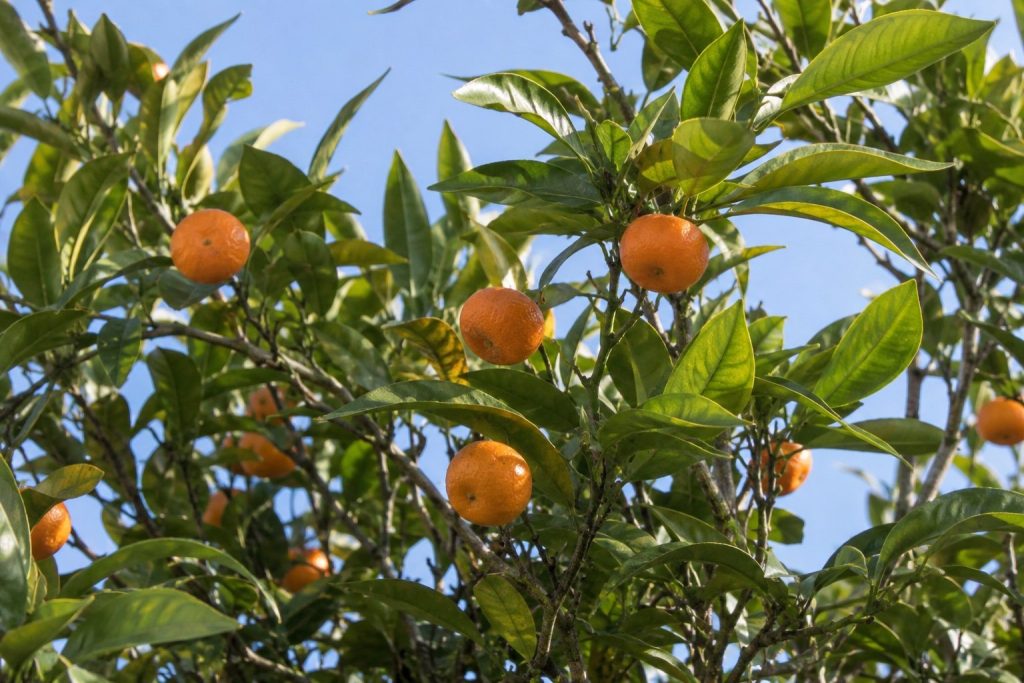
The fruit is a small mandarin 1 to 2 in (25 to 50 mm) in diameter, round to flattened in shape, a bright orange at maturity in December to January. The skin is thin, very easy to peel, and delicately aromatic. The flesh is firm, meaty, and pleasantly sweet, with a sugar content of 11 to 14 Brix. Remarkably, this old variety can be seedless, a rare trait among traditional mandarins that makes it ideal for eating out of hand.Flavor and ornamental interest
The Kishu Mikan is a dessert fruit par excellence, ideal for fresh eating thanks to its small size, ease of peeling, and incomparable sweet flavor, especially appreciated by children. Its late ripening (December to January) fills a lull in hardy citrus production. The ornamental interest is remarkable: small golden fruit adorning a compact habit, glossy evergreen foliage, and highly fragrant flowers in spring, a treasure of thousand-year-old Japanese agronomy.Updated:
What matters when choosing
Key points about Kishu Mikan Mandarin
Kishu Mikan, or Kinokuni, is a tiny, very fragrant, sweet, easy-to-peel Japanese mandarin. It differs from Kishu Nooka in usually having seeds, while offering the same bite-size format and early maturity.
Why choose it
- Sweet, fragrant flavor.
- Very easy to peel despite its tiny size.
- Early fall maturity at Riverside.
Its limits
- Very small fruit.
- Seeds are usually present.
- Few cultivar-specific hardiness references.
Practical notes
- Synonym
- Kinokuni
- Harvest at Riverside
- October through November
- Seeds
- Present
Cold-hardiness reference: about 12°F (−11°C)
Specialist nurseries report this cultivar reference for a mature, acclimated tree; it does not guarantee freedom from damage in a prolonged freeze.
Sources and method
The temperatures given are reference points for a mature tree with hardened wood. The table and callout repeat the same value as the profile. They guarantee neither freedom from damage nor a harvest after a freezing event.
Data reviewed on October 7, 2026.
- Givaudan Citrus Variety Collection — UCR — Identity, fruit, flavor, seeds, and season
- Citrus ID — Seedless Kishu — Description of the Kishu species and distinction from the seedless selection
- CitrusWorld — Kinokuni — Synonyms and horticultural fruit characteristics
- Agrumerie Vessière — Kishu Mikan — Reported hardiness reference for the cultivar sold
- Pépins Perdus — Kishu Mikan — Hardiness reference in the variety description; the technical data gives a different threshold