Cold hardiness
14°F (−10°C)
Identity
OriginSouth Carolina, United States
Genetic originSeedling of a commercial mandarin; parentage not demonstrated
USDA zone8b
Cold hardiness14°F (−10°C)
Height13 ft (4 m)
HarvestJanuary, December
SeedsFew
UsesFresh eating
FlavorsSweet
History & Description
Origin
Juanita is an American selection from a store-bought mandarin seed. Woodlanders recounts that it was planted outdoors by Juanita Barrineau, in Clarendon County, South Carolina. The variety bears her first name and distinguished itself through its production of good-quality fruit. The exact parent of the seedling is not identified by this American source. Several French sellers link it to Ponkan; this attribution remains a horticultural hypothesis and is not a demonstrated genealogy.Tree description
The foliage is evergreen and the commercially sold material is grafted notably on Poncirus trifoliata or FA5. Woodlanders gives an adult height of 10 to 12 ft, or about 3 to 3.7 m; the summary field is rounded to 13 ft (4 m). Mayolle instead indicates 10 ft (3 m), without specifying the rootstock of the tree evaluated. No sufficiently documented growth rate justifies a precise category. The cautious cold reference is 14°F (−10°C), reported by Mayolle; Voss and Anjou Citrus propose 10°F (−12°C). The information remains horticultural and concerns a well-established, acclimated adult tree in a sheltered situation. The duration of the freeze, wind, health, and rootstock change the risk of damage.Fruit quality
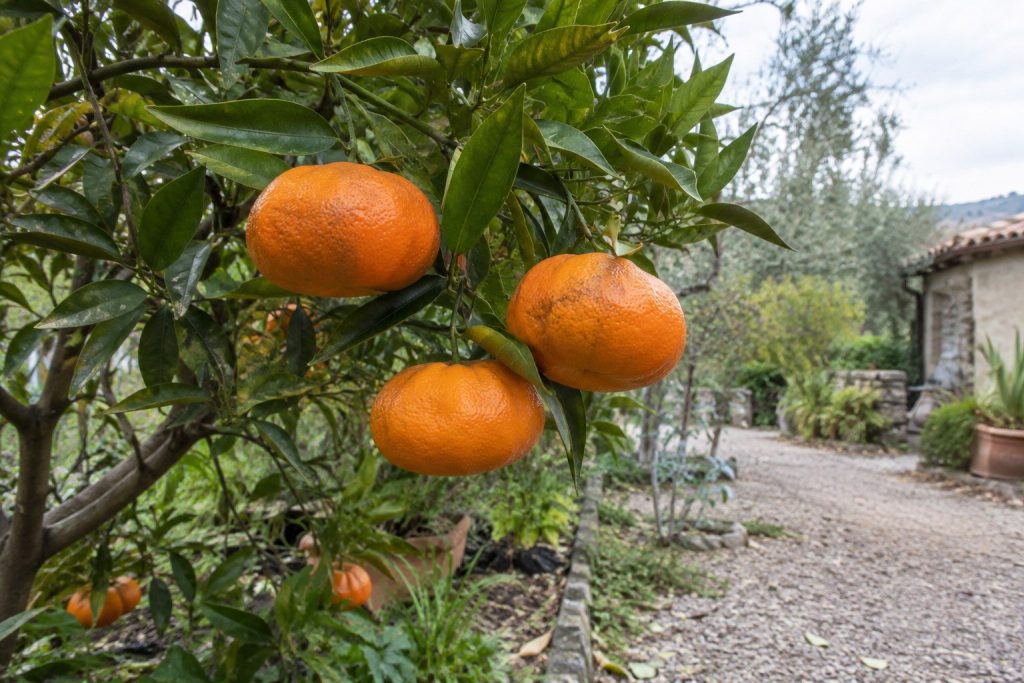
The French descriptions converge on a large, flattened mandarin with sweet, juicy pulp. Jardin Forêt describes thin, easy-to-remove skin and very few seeds. Other catalogs mention some seeds: the entry therefore keeps few seeds, without promising a completely seedless fruit. For the harvest, December to January follows Mayolle and the Anjou Citrus catalog; later announcements exist and the calendar must be checked locally. No fruit-specific freeze threshold was found.Flavor and ornamental interest
Juanita finds its place among the fresh-eating mandarins meant for winter tasting. Its colorful fruits can also add interest to the garden, but their presence on the tree does not prove their resistance to freezing. The USDA zone 8b classification is explicitly proposed in the table of contents of the book Agrumes résistant au froid published by Ulmer; it serves here as a growing reference, separate from the reported temperature. Voss ranks it more favorably in 8a, for trials in a protected situation. At the climatic limit, protecting young plants and following ripeness ahead of cold spells remain necessary.
Back to the collection
Updated: