Cold hardiness
5°F (−15°C)
Identity
History & Description
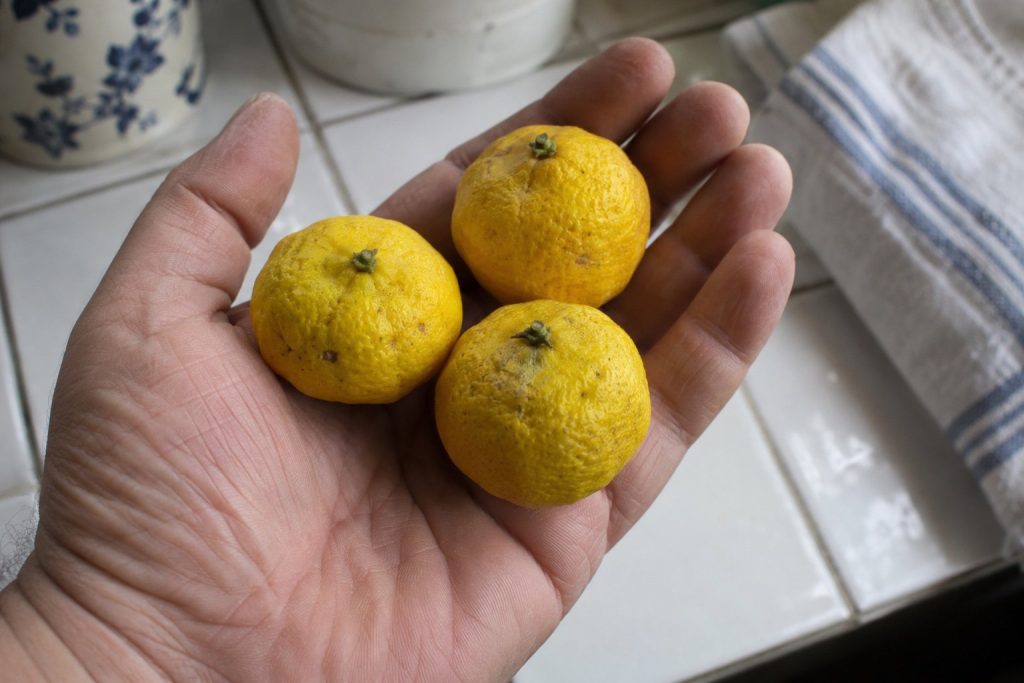
History & DescriptionOriginCitrus ichangensis, commonly called Ichang papeda, is one of the most cold-resistant evergreen citrus known. Native to the mountain forests of central and southwestern China, notably the provinces of Hunan, Sichuan, Guizhou, and Hubei, it grows wild in the Yichang region (formerly romanized as Ichang), on the steep slopes overlooking the Three Gorges of the Yangtze. In terms of citrus evolution, Ichang papeda holds a foundational position: it belongs to the subgenus Papeda, which groups the most primitive citrus species, and it is the direct ancestor of yuzu. Its genome is a precious resource for worldwide breeding programs for hardy citrus.Tree descriptionThe tree is a large, thorny, evergreen shrub reaching 10 to 16 ft (3 to 5 m) at maturity after slow growth. Its foliage is botanically remarkable: the petioles are extremely winged, almost as wide as the leaf blades, a characteristic trait of papedas. The large, highly fragrant white flowers open in spring.The fruitThe fruits, ripe from October to December, are of good size, oval, bright yellow at maturity, with thick, rough skin. The pulp is scant, very acidic and bitter, unfit for fresh eating. The zest, on the other hand, is extremely rich in aromatic essential oils. The seeds are numerous.Flavor and ornamental interestThe zest can be used as a substitute for lemon or yuzu to flavor marinades, hot drinks, and simmered dishes. Its spectacular hardiness of 5°F (−15°C) makes it one of the few citrus that can be grown in the ground well beyond the Mediterranean zones, up to USDA zone 7b.
Back to the collection
Updated: