
Cold hardiness
12°F (−11°C)
Identity
OriginJapan (Hirado Island, Nagasaki Prefecture)
Genetic originOld pummelo (Citrus maxima) selection from a seedling on Hirado Island
USDA zone8a
Cold hardiness12°F (−11°C)
Fruit cold hardiness25°F (−4°C)
GrowthVigorous
Height13 ft (4 m)
HarvestJanuary, February, December
SeedsModerate
UsesFresh eating, Juice
FlavorsSweet, Balanced, Highly aromatic
History & Description
Origin
The Hirado Buntan is one of the most renowned pummelos in Japan, native to the small island of Hirado, in Nagasaki Prefecture, off the northwest tip of Kyushu. Its history goes back to the 18th century, when a spontaneous pummelo seedling (probably from seeds brought from Indochina via the port of Hirado, then the only trading point with Europeans and Chinese under the Sakoku isolation policy) is said to have given rise to a tree with exceptional fruits. Selected and propagated by local farmers, the Hirado Buntan became over the centuries an emblematic regional specialty, grown in orchards on the sunny hillsides of the island and recognized as a product of the Japanese terroir. The term "Buntan" (文旦) designates pummelos in general in Japanese, and the prefix "Hirado" identifies this particular selection, distinguished by its sweetness without bitterness and its hardiness superior to classic tropical pummelos. Introduced to France by Pépinière du Bosc, it is now among the hardy pummelos most sought after by collectors of Japanese citrus.Tree description
The Hirado Buntan forms a vigorous tree of 10 to 13 ft (3 to 4 m) at maturity, with an upright habit and evergreen foliage of a bright green, with the large leaves characteristic of pummelos. Its growth is fast and sustained, and the tree is productive from its fifth year on FA5 or Poncirus trifoliata rootstock. The very fragrant white spring blossom is abundant and lasts several weeks. Its remarkable hardiness, documented down to 12°F (−11°C) for a well-established adult tree, makes it one of the most cold-resistant pummelos marketed in France, superior to classic pummelos, usually limited to 18°F (−8°C).Fruit quality
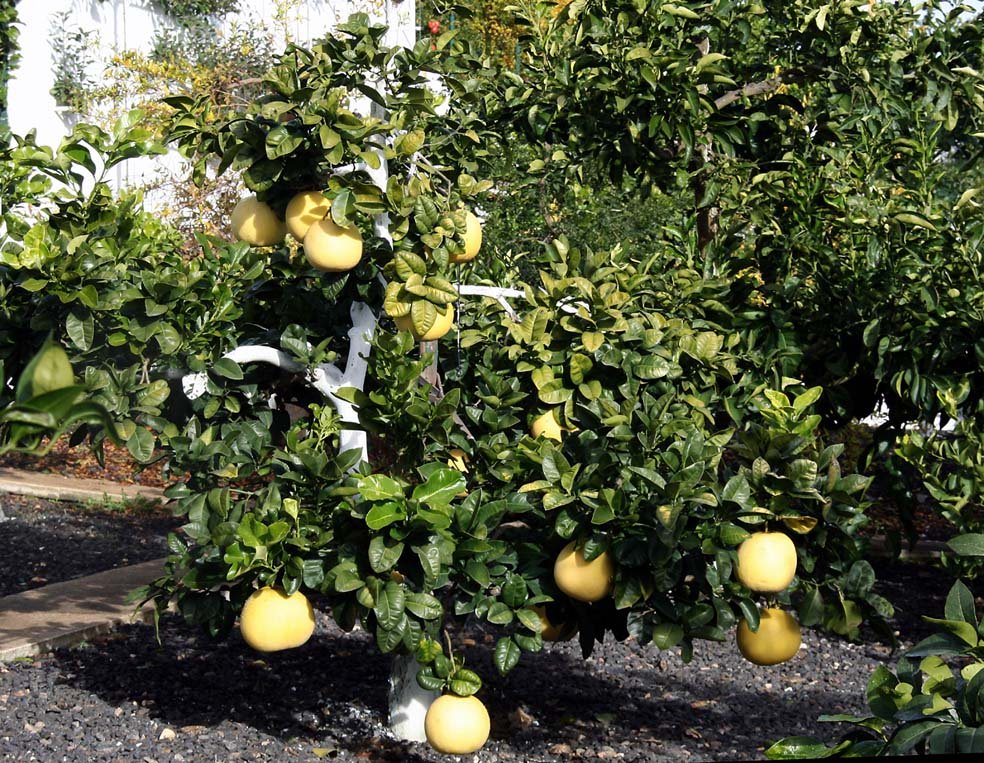
The fruits, voluminous (about 14 oz, or 400 g), have a round, slightly flattened shape and thick skin, golden yellow at maturity. The flesh, of an intense golden color, stands out for its particularly thin segment membranes, a very rare trait in pummelos that considerably eases eating. The flavor is remarkably sweet and juicy, without the bitterness typical of Citrus maxima, with very measured acidity and delicate floral aromas. Seeds are present in moderate quantity.Flavor and ornamental interest
Harvested between December and February, the Hirado Buntan is ideally eaten fresh, cut into segments, where its thin membranes and juicy flesh make it one of the most pleasant pummelos to eat. Much appreciated by Japanese chefs, it goes into refined salads with olive oil and herbs, into delicate sorbets, or simply as a dessert fruit. As an ornamental, its medium stature, dense foliage, and golden fruits hanging in winter make it a remarkable landscape subject, evoking the traditional orchards of Hirado Island, a living heritage of Japanese citrus growing in a French hardy-citrus garden.
Back to the collection
Updated: