
Cold hardiness
16°F (−9°C)
Identity
OriginFlorida, United States
Genetic originSport (bud mutation) of the 'Walters' cultivar of Citrus paradisi, parent of Star Ruby
USDA zone8b
Cold hardiness16°F (−9°C)
Fruit cold hardiness27°F (−3°C)
GrowthVigorous
Height20 ft (6 m)
HarvestJanuary, November, December
SeedsModerate
UsesFresh eating, Juice
FlavorsSlightly acidic, Balanced, Slight bitterness
History & Description
Origin
The Foster grapefruit is a historic Citrus paradisi cultivar native to Florida. It is a sport (spontaneous bud mutation) of the cultivar 'Walters', discovered in the late nineteenth century in Florida orchards. The Foster holds an important place in citrus history because it is the origin of many modern pink-fleshed grapefruit varieties: its descendant 'Hudson' was subjected to irradiation to produce the famous 'Star Ruby', today one of the most widely marketed pink grapefruit varieties in the world. Citrus paradisi is itself a natural Caribbean hybrid between Citrus maxima (Asian pummelo) and Citrus sinensis (sweet orange tree), which appeared spontaneously in Barbados in the eighteenth century. Its hardiness of 16°F (−9°C) paves the way for its cultivation in southern French gardens.Tree description
A large tree of strong vigor, reaching 13 to 20 ft (4 to 6 m) in the ground in favorable regions. Dense evergreen foliage, a steady glossy green, with the large winged leaves characteristic of the grapefruit. The large, fragrant white flowers bloom in spring. Vigorous growth and regular production after establishment.Fruit quality
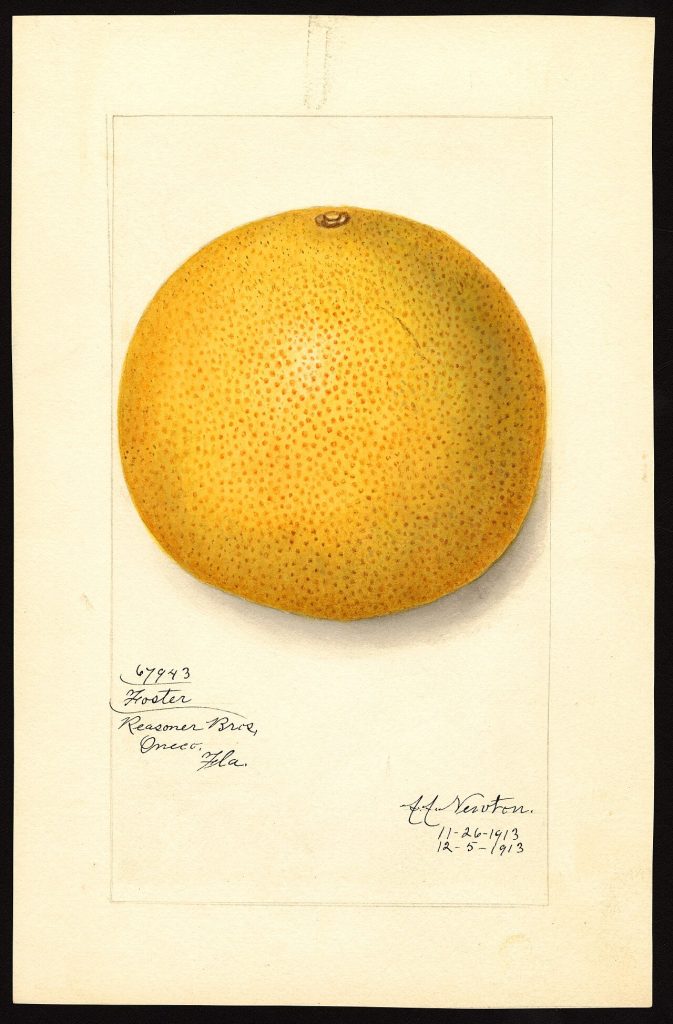
Medium to large, spherical fruit, with yellow skin slightly tinged with pink at full maturity. The flesh is slightly pinkish and juicy, with a balanced tart-sweet flavor and a slight bitterness in the membranes, typical of grapefruit. Contains a few seeds. The harvest takes place from November to January, at the start of the citrus season.Flavor and ornamental interest
The Foster grapefruit is enjoyed as a table fruit or as fresh juice. Its slightly pinkish flesh is visually attractive when cut. Its historical importance in the genealogy of the modern grapefruit makes it a tree sought after by collectors and enthusiasts of heritage citrus. Its large size and dense foliage allow productive living hedges in southern gardens.
Back to the collection
Updated: