Identity
History & Description
Origin
The Caffin Clementine is an old variety discovered in 1968 at Azemour de Caffin, Morocco, as a spontaneous mutation on an existing clementine tree, then selected and stabilized for its exceptional earliness and the remarkable quality of its fruits. Quickly propagated around the Mediterranean basin, it became one of the few varieties allowed in the specifications of the prestigious Protected Geographical Indication (PGI) "Clémentine de Corse", which covers only clementine trees grown to strict criteria in Corsican orchards. This official recognition makes it one of the most legitimately representative varieties of French Mediterranean citrus know-how. The Caffin stands out for its particularly early maturity (from late September), its high productivity, the near-total absence of seeds, and its improved hardiness when grafted onto Poncirus trifoliata. Sold by several specialized French nurseries including Agrumerie Vessière, Pépinières Ripaud, and Terre Lointaine, it is a leading choice for anyone wishing to grow an authentic Corsican PGI clementine in their garden.Tree description
The tree forms a handsome shrub of 8 to 10 ft (2.5 to 3 m) at maturity, with a rounded habit and evergreen foliage of a rich green. Growth is moderate, and the tree is very productive from the fourth year on Poncirus trifoliata rootstock. The choice of rootstock is decisive here, bringing hardiness to 16°F (−9°C), even 14°F (−10°C) depending on the site, versus only 19°F (−7°C) on standard FA5. The fragrant white spring blossom is abundant. Suited to zone 8b in acidic or non-calcareous soil (a Poncirus requirement).Fruit quality
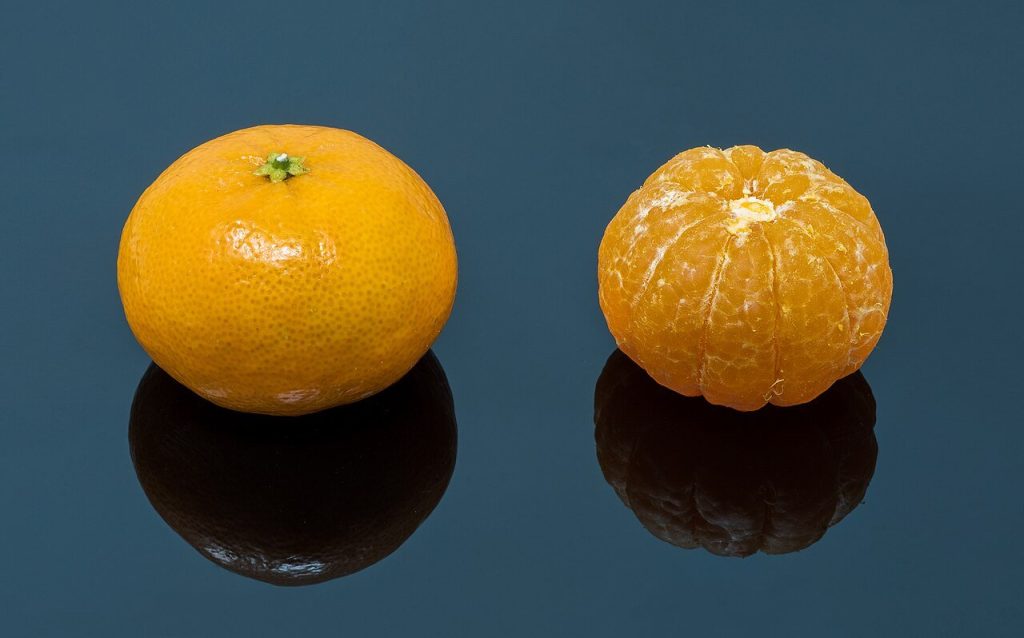
The fruits, medium to large (about 3 oz, or 80 g), have thin, bright orange skin that comes away easily. The flesh is firm, juicy, deep orange, almost entirely free of seeds, with a slightly tart, finely sweet flavor reminiscent of traditional Corsican clementines. Harvest begins in late September, when the skin is orange and the underside of the fruit keeps a greenish tinge, a sign of optimal freshness.Flavor and ornamental interest
Eaten fresh, the Caffin Clementine offers one of the most authentically Corsican taste experiences possible: tart, sweet, and finely fragrant, it immediately evokes the orchards of the eastern plain. Its flesh lends itself to juices, fruit salads, traditional pastries (citrus canistrelli), and artisanal liqueurs. As an ornamental, the compact, productive tree suits a Mediterranean or Atlantic garden perfectly, its orange fruits persisting from September into early winter and providing prolonged landscape interest.Updated:
What matters when choosing
Key points about Caffin Clementine
Caffin is above all a very early clementine: it opens the season with generally seedless, easy-to-eat, well-balanced fruit. Its main appeal is the early-fall harvest, not exceptional cold hardiness.
Why choose it
- Very early maturity, often as early as September or October.
- Generally seedless, sweet-tart fruit.
- Fairly thick peel, useful for handling.
Its limits
- Production can be irregular or modest.
- Ripe fruit holds poorly on the tree.
- Less cold-resistant than satsumas.
Practical notes
- Harvest
- September through October
- Origin
- Morocco, mutation of Bekria
- Use
- Fresh eating
Cold-hardiness reference: about 16°F (−9°C)
A deliberately cautious reference: Caffin remains a clementine and deserves a sheltered spot outside a Mediterranean climate.
Sources and method
The temperatures given are reference points for a mature tree with hardened wood. The table and callout repeat the same value as the profile. They guarantee neither freedom from damage nor a harvest after a freezing event.
Data reviewed on September 21, 2026.
- Todolí Citrus Fundació — Origin, earliness, fruit quality, and production limitations
- Agronom — Caffin — Morphology, maturity, and published horticultural threshold
- GenDep19 — cultivar table — Horticultural comparison of cultivars and rootstocks