Cold hardiness
7°F (−14°C)
Identity
OriginJapan
Genetic originNatural hybrid of pummelo (Citrus maxima) × Japanese mandarin, species Citrus obovoidea, a close cousin of the Kinkoji
USDA zone7b
Cold hardiness7°F (−14°C)
Fruit cold hardiness25°F (−4°C)
GrowthVigorous
Height13 ft (4 m)
HarvestJanuary, February, March, December
SeedsFew
UsesFresh eating, Juice
FlavorsSweet, Balanced, Acidless
History & Description
Origin
The Marunero Grapefruit (Citrus obovoidea 'Marunero') is an old and extremely rare Japanese citrus, long confused with its direct cousin the Kinkoji, which shares the same botanical species, Citrus obovoidea. The two varieties differ, however, in fruit shape, precise genetics, and traditional use: Marunero produces fleshier, sweeter pear-shaped fruits, while Kinkoji gives rounder, slightly more acidic fruits. The species Citrus obovoidea results from an ancient natural cross between a pummelo (Citrus maxima) and a Japanese mandarin, probably in the Kyushu region where these two parents historically met. Marunero stood out for its exceptional hardiness, one of the highest known for a grapefruit, which earned it preservation in Japanese farmers' gardens long before Western science took an interest. Its recent rediscovery by specialized European nurserymen, including Pépinière du Bosc in France, now makes it a sought-after subject for collectors of hardy citrus looking for a truly cold-hardy grapefruit.Tree description
Marunero forms a vigorous, very ornamental tree, reaching 10 to 13 ft (3 to 4 m) at maturity, with an upright, slightly spreading habit and dense evergreen foliage of a glossy dark green. Its growth is fast and sustained, and the tree comes into production from its fourth or fifth year on FA5 or Poncirus trifoliata rootstock. The spring white blossom is abundant and delicately fragrant. Its hardiness, documented down to 7°F (−14°C) for a well-acclimated adult tree, places it among the most cold-hardy grapefruits in the world, allowing cultivation in zone 7b without systematic winter protection.Fruit quality
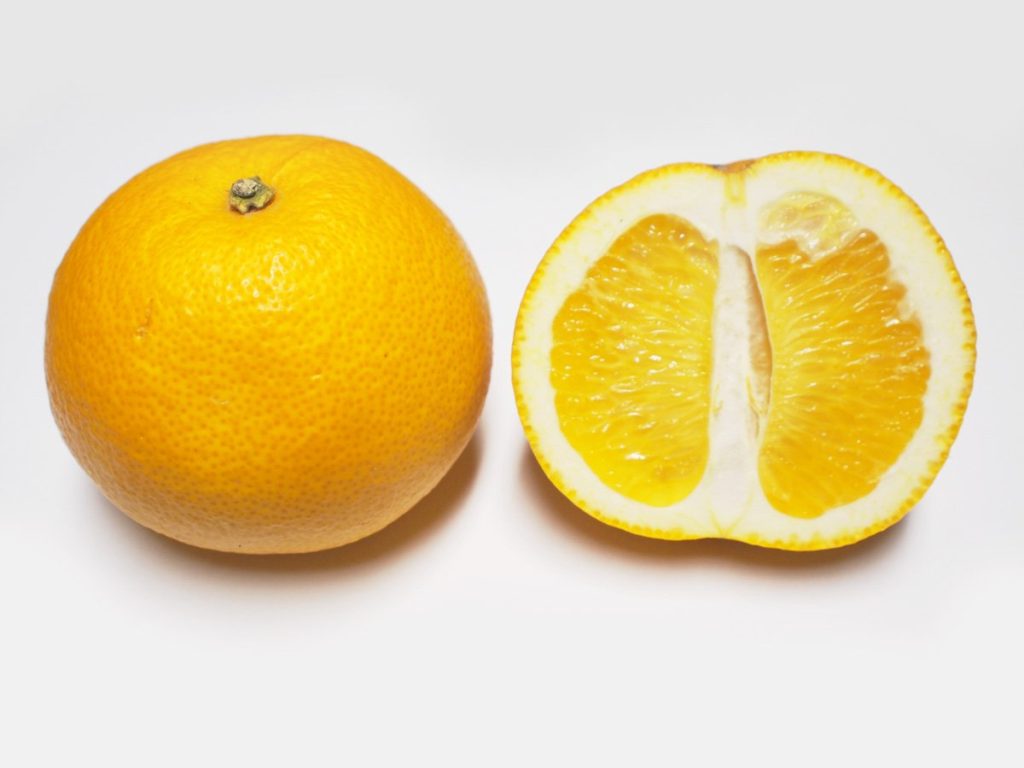
The fruits, remarkably large (up to 14 oz, or 400 g), have a characteristic pear shape and thick skin, yellow turning orange at full maturity. The firm, juicy flesh, yellow to orange in color, offers a surprisingly sweet and balanced flavor for a pummelo, with no bitterness at all, unlike classic Citrus maxima, which is the variety's most valuable distinctive trait. Seeds are few and do not get in the way of eating.Flavor and ornamental interest
Harvested between December and March, Marunero Grapefruit has the valuable advantage of being able to stay on the tree without losing its flavor qualities, allowing consumption to be spread over several winter months. Eaten fresh, it offers a unique experience: the firm texture of a grapefruit combined with the sweetness of a mandarin, without the bitterness that usually puts off European consumers. Its abundant, fragrant juice suits cocktails and plain juices. As an ornamental, the prolonged presence of its large yellow-orange fruits in winter makes it a spectacular landscape subject, a living witness to a rare, carefully preserved Japanese genetic heritage.
Back to the collection
Updated: