Where should you grow a finger lime?
In a garden subject to freezes, start by arranging container growing with bright shelter. In the ground, choose a very protected, well-drained location. UF/IFAS emphasizes wind sensitivity: the plant’s position should limit rubbing between thorny branches and exposure to drafts.
Sources recommend sun in Florida and sometimes partial shade in Australia. Seek sufficient light and gradually acclimate the plant to the garden. Small fruit does not mean a dwarf tree: check the cultivar’s vigor.
References: Australian National Botanic Gardens — Citrus australasica · UF/IFAS — Growing Finger lime in Florida · UC Cooperative Extension — Citrus in the Sierra Nevada Foothills
Watering, fertilizer and pruning: use a light touch
Check substrate moisture without keeping the roots standing in water. UF/IFAS reports lower fertilizer requirements than those of many commercial citrus. Adjust applications to the plant and its growth, rather than using a dose intended for a large citrus tree.
The New South Wales guide recommends light pruning: open up crossing branches and remove rootstock shoots. Avoid severe cutting back. Wear gloves when working: thorns complicate both care and picking, even on a plant that is still small.
References: NSW — Growing Australian native finger limes, Primefact 979 · UF/IFAS — Growing Finger lime in Florida · UF/IFAS — Something very different, the finger lime
Is finger lime cold hardy?
Treat finger lime as citrus that needs protection from freezing. Australian botanical gardens mention tolerance of light frosts, while UF/IFAS emphasizes its cold sensitivity. These descriptions do not define a threshold shared by cultivars or guarantee a harvest after a French winter.
Prepare shelter before freezing weather; a warm, dry living room is not necessarily suitable. Observe leaves, shoots and fruit separately: renewed growth does not prove that the crop has been preserved.
References: Australian National Botanic Gardens — Citrus australasica · UF/IFAS — Growing Finger lime in Florida · RHS — Growing citrus · UF/IFAS — Freeze Damage Symptoms and Recovery for Citrus
When should you harvest, and how should you use the pearls?
Harvest ripe finger limes: they do not ripen further after picking. The Australian guide describes a filled-out fruit that detaches easily and releases separate vesicles under gentle pressure. Check an opened fruit rather than relying solely on skin color.
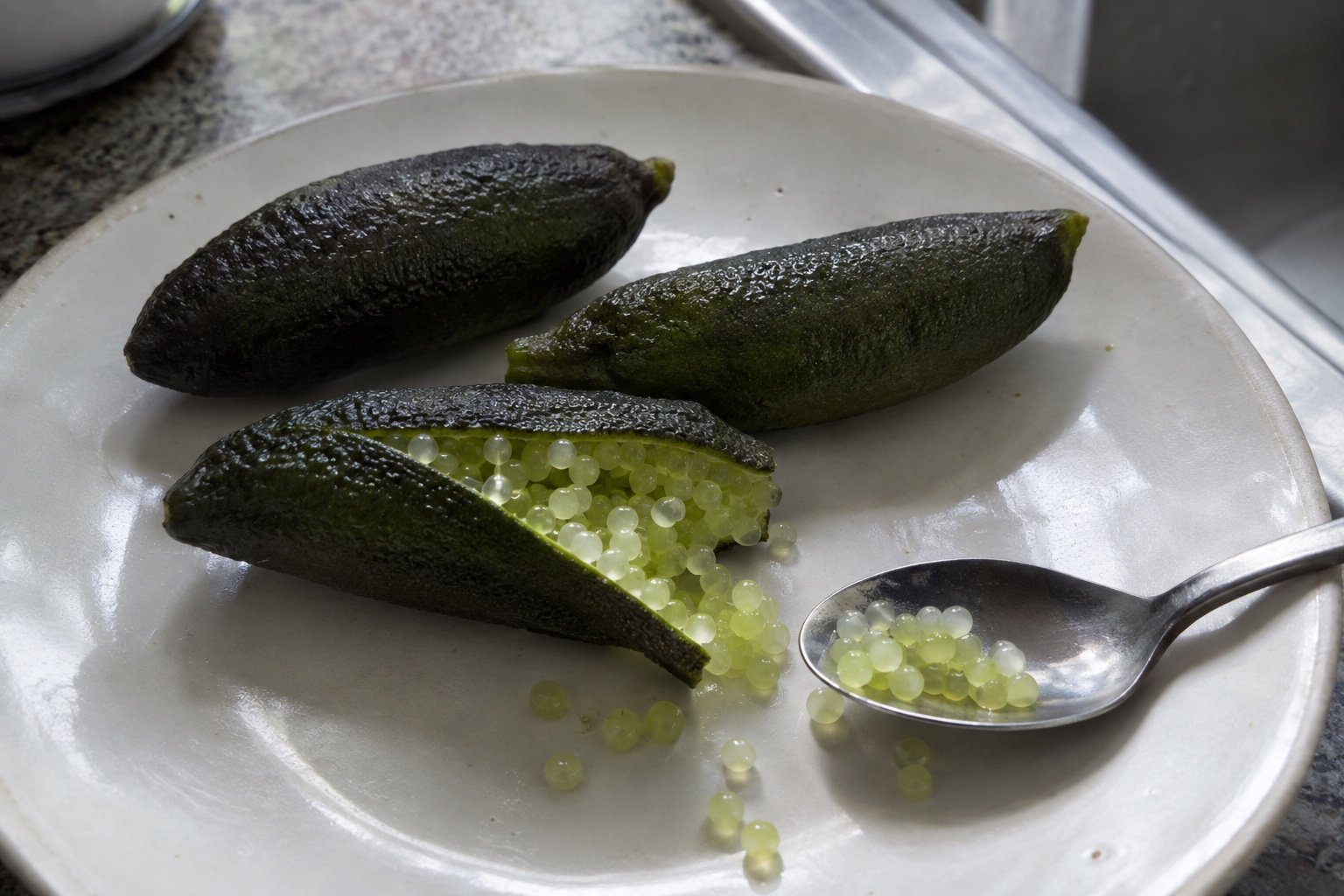
Cut the fruit around the middle and open it without crushing the peel onto the pulp. Pearls added as a finishing touch provide acidity and texture. UF/IFAS mentions drinks, fish and fresh garnishes, among other uses.
References: NSW — Growing Australian native finger limes, Primefact 979 · UF/IFAS — Something very different, the finger lime · USDA ARS — Minnie Finger Lime Makes Its Debut
An Australian citrus with several colors and selections
Citrus australasica originates in the humid forests of eastern Australia, between Queensland and New South Wales. References also use the name Microcitrus australasica. The French word “caviar” describes the juice vesicles; it refers neither to seeds nor to a product added inside the fruit.
UCR describes an accession with greenish-purple skin and nearly white pulp. The USDA also develops selections, such as Minnie Finger Lime for Florida. Their results and availability do not automatically transfer to plants sold in France.
References: Australian National Botanic Gardens — Citrus australasica · UCR — Microcitrus australasica, CRC 1484 · USDA ARS — Minnie Finger Lime Makes Its Debut
Frequently asked questions about finger lime
How do you eat finger lime?
Open the fruit and gently release the small pulp vesicles. They are mainly used as a fresh garnish to add acidity and texture. There is no need to squeeze the whole fruit like a lemon.
Are finger lime pearls its seeds?
No, they are vesicles containing juice. Seeds are separate from this pulp. The caviar-like texture explains the fruit’s French common name, with no connection to animal caviar.
Why does my finger lime have so many thorns?
Thorns are normal in this citrus and do not, by themselves, indicate a problem. Plan to wear gloves for harvesting and avoid a location where its branches regularly snag people passing by.
Does red-skinned fruit always contain pink pearls?
External color is insufficient to predict pulp color. Ask for a cultivar description and, if possible, a photograph of an opened fruit from that same plant or selection.
Can you get fruit quickly from a seed?
This is not a predictable method for harvesting quickly. Australian sources describe slow growth and a long wait in seedlings. An identified grafted plant is generally more appropriate for a harvest project.
In what season should you harvest in France?
There is no validated calendar here for each cultivar. The periods published in Australia and Riverside concern their local conditions. Follow your fruit’s development and check ripeness by opening one before harvesting the batch.
Sources and method
A documentary synthesis from the encyclopedia, published by Léo, an amateur gardener on the Arcachon Basin, in USDA zone 8b. Australian and university references describe the plant, fruit and growing practices. Their climatic observations and calendars do not constitute a cultivar comparison in France. The cited sources are documentary; this page does not report a personal freezing trial.
- Australian National Botanic Gardens — Citrus australasica
Origin, cultivar diversity, slow seedlings, value of grafting and growing in an Australian context.
- NSW — Growing Australian native finger limes, Primefact 979
Light pruning, ripeness criteria, picking and absence of postharvest ripening; advice drawn mainly from Australian growers.
- UF/IFAS — Growing Finger lime in Florida
Freeze and wind sensitivity, drainage, exposure and moderate fertilizer applications; Florida context.
- UF/IFAS — Something very different, the finger lime
Thorns, juice vesicles and uses in garnishes, drinks and cooking.
- UCR — Microcitrus australasica, CRC 1484
Former botanical name, dark-skinned and pale-pulped accession, and calendar specific to Riverside.
- USDA ARS — Minnie Finger Lime Makes Its Debut
Development of a selection for Florida, pulp texture and use as a fresh garnish.
- RHS — Growing citrus
General principles of container growing and bright overwintering conditions; not a finger lime-specific hardiness threshold.
- UF/IFAS — Freeze Damage Symptoms and Recovery for Citrus
Differences between damage to fruit, leaves and wood in citrus.
- UC Cooperative Extension — Citrus in the Sierra Nevada Foothills
Moving containers, age, acclimation, fruit ripening and microclimate; Californian context.